Showing posts with label Bible proofs. Show all posts

Wednesday, July 8, 2015

Women in Ministry- Where to Draw the Line? Part 1: The Great Commission

This article was first written in April 2013 in response to a book called "Should She Preach?"


In my current season of ministry, I labor as an itinerant evangelist with a small fellowship of people under the headship of Mark 1:15 ministries. In my role as a leader in this band of evangelists, I am often approached to join hands with other individuals and groups that are going forth to proclaim the Gospel. We do have standards of accountability, methodology, and theology that no one formally adheres to, but evangelists are observed and known before they go out with our group. There are a few standards that we demand of our members. They must be born again believers in Jesus Christ who faithfully attend church. They are all under the care and leadership of elders. They must demonstrate the fruit of the Spirit in their lives and ministry. They must have the approval of their spouses if they are married. If they are married with children, their first priority is ministry at home. There are a few other minor issues that we demand, including methodology of using sound biblical evangelism of the law to the proud and grace to the humble.

I was challenged this week about one other issue, the issue of gender. I have thought this through before, and have studied the scripture, but never have I written down a formal stand on the issue of women as evangelists on the street. There are a few groups of Evangelists that have gender-based standards, and that list is growing. It is going to become a point of contention in evangelism circles if it has not already. I am going to challenge thinking on both sides of the issue, but I am going to do so based on sound biblical exegesis.
15 And he said to them, “Go into all the world and proclaim the gospel to the whole creation. (Mark 16:15, ESV)

18 And Jesus came and said to them, “All authority in heaven and on earth has been given to me. 19 Go therefore and make disciples of all nations, baptizing them in the name of the Father and of the Son and of the Holy Spirit, 20 teaching them to observe all that I have commanded you. And behold, I am with you always, to the end of the age.” (Matthew 28:18-20, ESV)

8 But you will receive power when the Holy Spirit has come upon you, and you will be my witnesses in Jerusalem and in all Judea and Samaria, and to the end of the earth.” (Acts 1:8, ESV)

15 but in your hearts honor Christ the Lord as holy, always being prepared to make a defense to anyone who asks you for a reason for the hope that is in you; yet do it with gentleness and respect, (1 Peter 3:15, ESV)
These commands come after the first evangelist – Does anyone know who this is?- proclaimed the good news.  The evangel- the good news- that Christ died for our sins according to the scripture, was buried- and on the third day rose again- according to the scripture. (1 Corinthians 15) Again, according to this standard, who was the first post- resurrection evangelist?
11 But Mary stood weeping outside the tomb, and as she wept she stooped to look into the tomb. 12 And she saw two angels in white, sitting where the body of Jesus had lain, one at the head and one at the feet. 13 They said to her, “Woman, why are you weeping?” She said to them, “They have taken away my Lord, and I do not know where they have laid him.” 14 Having said this, she turned around and saw Jesus standing, but she did not know that it was Jesus. 15 Jesus said to her, “Woman, why are you weeping? Whom are you seeking?” Supposing him to be the gardener, she said to him, “Sir, if you have carried him away, tell me where you have laid him, and I will take him away.” 16 Jesus said to her, “Mary.” She turned and said to him in Aramaic, “Rabboni!” (which means Teacher). 17 Jesus said to her, “Do not cling to me, for I have not yet ascended to the Father; but go to my brothers and say to them, ‘I am ascending to my Father and your Father, to my God and your God.’” 18 Mary Magdalene went and announced to the disciples, “I have seen the Lord”—and that he had said these things to her. (John 20:11-18, ESV)
John and Peter observed- John believed- but both returned to their homes, no proclamation, no evangel, no good news. Mary stayed behind, she had been to the tomb, she first noticed that Jesus was not there, she got John and Peter. Now, she stayed behind in mourning. Jesus revealed Himself to her, and commanded her to go- to tell the good news- that He had risen and would ascend. He trusted this news to a woman- the gender whom the Jewish males would pray thus about: ‘thank you God that I was not born a gentile, Samaritan…or a woman’. This woman who could not even testify in court- she was entrusted with the first good news by Jesus Himself- post death and resurrection.

Having said all of this, notice in all of the scriptures that contain the Great Commission, there is no gender announcement. We know that Jesus’ disciples- not the apostles who were to be those who would be responsible for establishing and leading the church- but the disciples of Jesus which included the 12, but also at least 120-500 men and women at this time. If you contend that the Great Commission was only given to the 11 apostles, then you contend that there is no responsibility for Christians today to proclaim the Gospel. If you contend (rightly so) that those to whom the command was given included both apostles and disciples, you must include women in the equation. So from the time of the Great Commission, both faithful men and faithful women were commanded to proclaim the evangel- to be evangelists.

Of course, as we look in the book of Acts, the history of the establishment of the church and the early fulfillment of the Great Commission, we see the giants of the faith- Peter, Paul, Stephen, Phillip, Timothy, Mark- all men- all front and center. Is this to say that there were no women involved? Clearly, there was. Again, we must consider the culture, especially of the Jewish Church. Women were not reliable witnesses in that culture. We do not argue from silence in the scripture, and I will not do so here. We do not see Luke chronicling female evangelists. That does not mean there were not any, and it certainly does not mean that there was a gender restriction on the command.

So what is the issue? The issue gets convoluted when we begin to look into the epistles of Paul as he looks at the church- those who are part of the invisible and universal body of Christ- and the gender roles within the church. And this is what we will look at in the next article. Please prayerfully consider the scripture and respond and correct as we go by using the scripture.

Wednesday, July 1, 2015

I Don't Hate You

Please go to my friend Adam's  page and check out this cartoon. It is amazing, and says what we Christians should be trying to say in the midst of our culture. You may want to check my earlier post also.

Monday, June 29, 2015

Are you under the Law or under Grace?

It Depends.

If you have repented and trusted Christ as your Savior you are under Grace. 

If you have not, you are under God's Law and you will be judged by Jesus Christ on Judgment Day

The recent supreme court ruling has awakened an age-old debate and a method by which non-believers can argue with Christians about sins that they want to justify. In the flowchart I have inserted below, an age old red-herring straw man has been pictured. Ostensibly, it destroys 'religion's' arguments against same sex marriage. To the typical layman, this is an effective tool that could convince them that perhaps same-sex marriage is a-ok because we do not observe certain Old Testament commands, and hold tightly on to other ones. 

In the Old Testament, particularly in the first five books, God sets out his law in written form. This law was for a specific chosen people that lived at a specific time. The Mosaic law, as written in Exodus, Deuteronomy, and in Leviticus were for God's chosen people, Israel. These are the people through which God's Savior- Jesus- would come. It was through Him that the blessing of Salvation would come.


1Now the Lord said to Abram, “Go from your country and your kindred and your father’s house to the land that I will show you. 2And I will make of you a great nation, and I will bless you and make your name great, so that you will be a blessing. 3 I will bless those who bless you, and him who dishonors you I will curse, and in you all the families of the earth shall be blessed.” Genesis 12:1-3

Israel was a chosen people for the purpose of displaying the grace of God to the world. Being part of Israel did not secure your salvation, however, if you believe, looking to God as your Savior, He would save you. God knew who these people were. He was national Israel's king and Sovereign, saving them out of Egypt and promising them a land and a national identity. When you lived in Israel, you lived according a set of laws that were to show you as a people that were set apart. These laws were civil, moral, ceremonial, and dietary. These include the infamous commands about eating shellfish, wearing mixed fabrics, eating pork, dealing with women's monthly period, and, of course, homosexuality (not to mention incest, bestiality, and other perversions). These are the laws of the Old Covenant, for the Jewish people, to separate them as a people from out of the other nations. These are not laws that are for us today, especially not for gentiles (those who are not Jewish). The penalties for breaking these laws are also not applicable today- that is fortunate for the penalty for blaspheming God which happens almost constantly in our world was a death penalty offense. 

God does not change, but the way that he deals with people does change. God dealt with Adam and Eve differently than Noah, Abraham, and Even Moses. God deals with Christians today through the eyes of the New Covenant. We are not under the law, but under grace. We keep his commands- not to be saved but because we are saved. The keeping of the law does not save us, but because Christ has kept the law we can receive the benefit of him keeping the law. We are seen as holy and righteous, not because we have kept the law, but because we have trusted in Christ's payment for sin- his death, burial, and resurrection. 

Now what that does not mean is that we can continue in sin. When Christ saves us, we are given a new identity, and a new character. It is called being born again (John 3:3) where our very nature is changed (2 Corinthians 5:17). We are now filled with the Holy Spirit who empowers us to keep the commandments (Matthew 22:37-39, Romans 13:8-10). As a Christian, it is not impossible to sin, but it is impossible to live in sin. Even the promise that if we confess our sins he is faithful and just to forgive us and cleanse us from all unrighteousness (1 John 1:9) is based on confession, which means agreeing with God on what sin is (1 John 1:7-8). Indeed, if we say we have no sin, we are calling God a liar. This promise is not so we can continue to live in sin, rather, that we will not sin (1 John 2:1) but if we do sin, we have an Advocate- Jesus Christ. The process is called sanctification (Romans 6) where as we walk with Christ in obedience we become more like Him. 

Under Law or Under Grace? 
If you are a Christian, you have been set free from the law (Romans 7:4-6). In terms of the law, you have been justified or declared 'not guilty'. This is because Christ's righteousness in terms of the law has been imputed to you, so that it is just as though you have not sinned (2 Corinthians 5:21) Does that mean we are free to sin with abandon? (Romans 6:1-2) As Paul argues "May it never be!" It also means that we do not get to point to the law as the one that has saved us or that our obedience to the law makes us righteous (Romans 3:19-20, Galatians 2:16). We are warned continually in the New Testament not to put ourselves back under the law, for we have been set free from it. Instead, we ought to walk by the Spirit in response to His leading (Romans 6). This is a lifetime struggle; but the promise is that one day for the Christian we will become like Him (1 John 3:2) and we continue in that hope as we purify ourselves (1 John 3:3). The ability to do this all comes by the grace of God, for without conversion and regeneration, we would have neither the ability or desire to obey. 
For the non-Christian- the Atheist, the Muslim, the Jew- they are all still under the law, and will be judged by it. God is the only righteous judge. It is not the Christian's job to hold these folks to the law, or to judge them accordingly while we are here on this earth. The Holy Spirit is working in the unbelieving world about sin, righteousness and judgment (John 16:7-11) It is our job to cooperate with the Holy Spirit in warning them, however, by proclaiming the law so that they might know that they are lawbreakers. Further, we need to warn them of the coming judgment, as well as proclaim that there is One Savior, Jesus Christ. There is great hope for lawbreakers like you and me- the cleansing grace of God in our Lord Jesus Christ: 

9Or do you not know that the unrighteous will not inherit the kingdom of God? Do not be deceived: neither the sexually immoral, nor idolaters, nor adulterers, nor men who practice homosexuality, 10nor thieves, nor the greedy, nor drunkards, nor revilers, nor swindlers will inherit the kingdom of God. 11And such were some of you. But you were washed, you were sanctified, you were justified in the name of the Lord Jesus Christ and by the Spirit of our God. 1 Corinthians 6:9-11


If you have not repented and trusted Christ alone as Savior, you are still under the law, and God will judge you. You will not inherit the Kingdom of Heaven.  However, no matter what you have done, if you by grace through faith (Ephesians 2:8-9) will confess (agree with God regarding your sin) repent (turn from your sin and self-righteousness to Christ) and trust/believe in Christ alone, you will be washed, sanctified, and justified. The judgment will be taken on by Christ, and His righteousness will be imputed to you. You will be set free from death- the penalty for sin.

Why So Angry?

Why do you suppose these mockers made this graphic? The number one reason is due to their own God- given knowledge that they have sinned against God, and by pointing out others' sin, they believe that they are somehow justified. However, they do have a point. The way that the institutional church inconsistently proclaims a weakened, man-centered gospel as well as the fact that church discipline has fallen by the wayside as the Institutional Church only wants to grow larger while looking more and more like the culture rather than being a beacon of light and holiness in the midst of the culture. This because many churches have nothing to do with the Church- the spotless bride of Christ. 

As a former Pastor, and a regular church attender and observer of the US church, I have seen a consistent pattern emerging in many of the larger churches. This pattern is that somehow we believe that the church grows only through compromise labelled as 'love'. However, if we observe several mainline denominations like the ELCA and Episcopal Church, their acceptance of culture over scripture has resulted in a steep decline in attendance, giving, and membership. This gives me hope if it were not for the churches like Willow Creek and Purpose Driven Churches which use man-centered gimmicks to grow their churches a mile wide and an inch deep. They use the culture to grow their church ostensibly to give them the opportunity to proclaim the gospel. The gospel is watered down to a point where it is often simply a change of identification rather than a heart change. The promise- pray a prayer 'accepting' Christ, attend a small group, and you will change morally and God will give you a purpose in this world as you travel around the bases or go from the crowd to the core.

The watered down, man centered Gospel has produced a generation of weak in the knee christians that do not know the scripture or the power of God. They do not understand that the Church is the Bride of Christ, whom Christ died to make Holy. Part of this process necessarily happens within the church in discipleship and preaching of the Word. It also happens in the process of Church discipline where the believer as a member of the church falls short and those who are spiritual seek to restore that person in a spirit of gentleness. It is this accountability and addressing of sin in a manner that honors God which the world sees as lacking in our fellowships. They do not see us as sanctified or separate from the world.

A glaring example is the inconsistent manner that we deal with things such as divorce. In my part of the world, churches are filled with divorced people- I am one of them. Many churches and Pastors do not blink an eye at divorce and they willingly remarry people who, through their own sin, brought about divorce. We scream VERY loud about homosexuality, and find it a perversion of the intent of God  (indeed it is) but we hardly blink an eye when an adulterous cheating divorced person is in our membership or approaches the Pastor to be remarried. People who are married seek the counsel in some of these churches and are encouraged to divorce for unbiblical reasons (I have heard self-actualization as an excuse for divorce from a 'christian' counselor!)  Indeed, if the divorced person is the offended party in the divorce, or a repentant offender that caused the dissolution of marriage, Christians should seek to build up and love through Biblical Church Discipline and restoration (Galatians 6:1-2). All to often, however, it is not even addressed through fear that one or both of the parties will become offended and leave the church. 

Biblical Church Discipline is for the purpose of the building up and edification of both the one being disciplined as well as the rest of the Church. It allows the power of the Gospel to change lives for the better, bringing glory to God through these changed lives. This also separates the church from the world as an agent of real and permanent life change, and this brings the Church to a new place of honor and respect in the community. Avoiding the problem or not confronting sin in the church has the opposite effect; it brings shame to God and lives are stuck and shackled to sin. The churches then are rightly seen in the community as just another social club.

What does this mean to us? 
As believers in Christ Jesus, we are called to live lives as holiness and separation from the world and the world system. What that looks like is we personally follow Jesus through reading His Word and obeying it, as well as a life of prayer consistently communicating and communing with God. We ought to be in Churches that faithfully preach the Word and practice church discipline. And we ought to be participating in the Great Commission through verbally sharing our faith with the people we come into contact with daily. This does not mean senseless judgment that casts a broad stroke of condemnation, rather, a reasoned Biblical approach that shares the bad news that man is unrighteous and stands guilty before God (Romans 3:9-19, 23) but that God is rich in mercy sending His Son (Ephesians 2:4) and through repentance and faith in Christ, we can be saved (Ephesians 2:8-10, John 3:16-17). 

When someone asks you about Divorce, Shellfish, or mixed fabrics, use it as a launching pad to share the good news that you have fallen short under the entire law, specifically the law to love the Lord your God and your neighbor as yourself. You can then ask your friend how he or she has done in terms of keeping God's moral law or the two greatest commandments. You can then go on graciously to explain how you no longer are under the law, because the only One who has ever kept the law in thought, word, and deed died on the cross, taking the penalty for your sin, and rose again on the third day defeating death. You can share that you are now seen as righteous by God, not because you are good, or better than anyone else, but because you serve a gracious and merciful God.

Red-Herring Straw-Man Argument


Monday, March 16, 2015

Summary of Beliefs:Roman Catholics vs. The Bible


Roman Catholicism
The inclusion of Roman Catholicism in this paper is purposeful. Like any other religion, it is a false doctrine of works, and a false combination of the teachings of man and the Word of God, the Bible. It has always been a marriage of the world systems of government and religion. In history, Roman Catholics have sought (and in some cases gained)  much political power and influence. The Roman Catholic system of religion allows them to control their followers, because the Church ‘holds the keys’ of heaven and hell. They have this control over all of their followers, who have included many princes and rulers. They claim to be Christian, but Paul’s letter to the Galatians calls them out as those to be anathema (damned) because they bastardize the Gospel by adding works and the tradition of man.
Short History
According to Catholics, their faith was established by Jesus, and built upon Peter (Matthew 16:18) who was the first ‘Pope’.
"Jesus entrusted a specific authority to Peter: "I will give you the keys of the kingdom of heaven, and whatever you bind on earth shall be bound in heaven, and whatever you loose on earth shall be loosed in heaven." The "power of the keys" designates authority to govern the house of God, which is the Church. Jesus, the Good Shepherd, confirmed this mandate after his Resurrection: "Feed my sheep." The power to "bind and loose" connotes the authority to absolve sins, to pronounce doctrinal judgements, and to make disciplinary decisions in the Church. Jesus entrusted this authority to the Church through the ministry of the apostles and in particular through the ministry of Peter, the only one to whom he specifically entrusted the keys of the kingdom."
The history of the early church has been adopted by the Catholic Church as their own with some legendary changes. The most significant claims of Peter being the first Pope beginning the line of apostolic succession is not even supported by secular or Biblical history. For example, Peter was never in Rome, and was not even seen as a prominent leader in the early church after Acts 10, and he aligned himself as just one of the apostles, not the chief apostle or Pope (1 Peter 1:1). The legend of Peter as the ‘rock’ upon which the church is built is needed for the church to claim the unbroken apostolic authority to exercise control as the True Church.  
What really separates Roman Catholicism from the rest of the Biblical underground church is the adoption of Roman traditions for church government as well as adopting some traditions of their communities that they were a part of. Ultimately, the Catholic Church was formalized and standardized in 313 as Constantine legalized Christianity and took over as the head of the Roman Church. They formalized position of bishops and the bishop of Rome (the Pope) Leo 1 was likely the first pope in Rome around 440 AD.
Summary of Beliefs
The Catholic Church believes much like we do when it comes to Jesus Christ. They hold that Jesus is eternal God, begotten not made, of one being with the Father. They believe that Jesus was born of a virgin. They hold to his death, burial, and resurrection as historical fact. Unfortunately, the official position of the Church views justification purchased at the cross as incomplete. In fact, in the Catholic view if one agrees with the Bible that justification is by faith alone, that person is damned:
"If any one saith, that by faith alone the impious is justified; in such wise as to mean, that nothing else is required to co-operate in order to the obtaining the grace of Justification, and that it is not in any way necessary, that he be prepared and disposed by the movement of his own will; let him be anathema".
"If any one saith, that man is truly absolved from his sins and justified, because he assuredly believed himself absolved and justified; or, that no one is truly justified but he who believes himself justified; and that, by this faith alone, absolution and justification are affected; let him be anathema,".
If not by faith alone, how is one justified? According to the Catholic church, we must have works, specifically the sacraments, to add enough merit to gain eternal life:
"Moved by the Holy Spirit, we can merit for ourselves and for others all the graces needed to attain eternal life, as well as necessary temporal goods”.
"...Moved by the Holy Spirit and by charity, we can then merit for ourselves and for others the graces needed for our sanctification, for the increase of grace and charity, and for the attainment of eternal life."
"The Council of Trent teaches that the Ten Commandments are obligatory for Christians and that the justified man is still bound to keep them; the Second Vatican Council confirms: "The bishops, successors of the apostles, receive from the Lord . . . the mission of teaching all peoples, and of preaching the Gospel to every creature, so that all men may attain salvation through faith, Baptism, and the observance of the Commandments."
Even if you gain enough merit, you can lose your justification. You need to regain it from the church through works (sacraments):  
“Justification can be lost by sinning. To regain the grace of justification you must participate in the sacraments and perform penance”.
The Roman Catholic belief is that tradition is equal to Scripture (which only the Magisterium can interpret) so they are able to justify the adoption of tradition from the variety of pagan faiths that were around at the time of its legalization by Constantine. These traditions include the veneration of Mary, and her role as a co-mediator with Jesus Christ. The Catholics simply renamed the pagan female deities, and imitated the worship of these deities, elevating the human sinner Mary to god-like status. They also got traditions like the confessional, church government, and the ‘sacrifice of the Mass’ by adopting various pagan religious practices.
The Biblical View
Many of these practices mentioned above seem innocuous to the faithful Catholic, but as we study the origins and understand the scripture, the traditions are seen as tools to make the Catholic Church herself as the Savior, and not King Jesus. Martin Luther in his Commentary on Galatians was very direct in addressing the shortcomings of the Catholic Church specifically on the theme of justification:
“The nefarious opinion of the papists, which attributes the merit of grace and the remission of sins to works, must here be emphatically rejected. The papists say that a good work performed before grace has been obtained, is able to secure grace for a person, because it is no more than right that God should reward a good deed. When grace has already been obtained, any good work deserves everlasting life as a due payment and reward for merit. For the first, God is no debtor, they say; but because God is good and just, it is no more than right (they say) that He should reward a good work by granting grace for the service. But when grace has already been obtained, they continue, God is in the position of a debtor, and is in duty bound to reward a good work with the gift of eternal life. This is the wicked teaching of the papacy.
Now, if I could perform any work acceptable to God and deserving of grace, and once having obtained grace my good works would continue to earn for me the right and reward of eternal life, why should I stand in need of the grace of God and the suffering and death of Christ? Christ would be of no benefit to me. Christ's mercy would be of no use to me.”


In other words, Roman Catholicism is a perversion of the Gospel. Paul himself calls it thus; anything else than the simple repentance from sin and trust in Christ alone is another gospel resulting in damnation:
Galatians 1: 6-9 I marvel that ye are so soon removed from him that called you into the grace of Christ unto another gospel: 7Which is not another; but there be some that trouble you, and would pervert the gospel of Christ.
8 But though we, or an angel from heaven, preach any other gospel unto you than that which we have preached unto you, let him be accursed. 9 As we said before, so say I now again, If any man preach any other gospel unto you than that ye have received, let him be accursed.


Galatians 2:21 I do not frustrate the grace of God: for if righteousness come by the law, then Christ is dead in vain.
Roman Catholics, like the Judaizers in the New Testament, desire there to be a connection to the Church that requires reliance on the church and tradition in order to gain salvation. This control is gained by making the church, the priesthood and the sacraments the only vehicle by which man can be saved. In the middle ages ignorance of the scripture allowed this control to extend from the peasants all the way to governments and kings. In the modern day, this willful ignorance of the masses has allowed the Catholic Church to pull the wool over the eyes of other Christian denominations and Christian leaders. This is accomplished by changing terminology related to salvation to match biblical terms. The use of the terms grace, born again, justification, and receiving Christ are examples of salvation terms that Roman Catholic leadership has co-opted for their purpose.
Term
Roman Catholic Meaning
Biblical Meaning
Born Again
Baptism (mostly infant)- means that infant is now a member of the church and part of the body of Christ- and can receive the grace of God via the sacraments and works. This removes original sin and actual sin.
A gracious act of God by which He imputes Jesus’ righteousness to repentant sinners. Based on the grace of God not the merit of any work.  (John 1:12-13, 3:3, 5, 16-18, Acts 4:12, 2 Corinthians 5:17,21
1 Peter 1:23)
Receive Christ
The Eucharist, or the sacrifice of the Mass (Lord’s Supper), Where the Catholic believes the elements of wine and wafer are changed into the actual body and blood of Jesus
A colloquialism, taken from John 1:12-13, the idea that when we repent and place trust in Jesus we ‘receive Him’ into our lives. Upon repentance and faith we become a new creation (2 Corinthians 5:17)
grace
Is a gift, granted to those who are baptized, and infused into the Catholic through doing good works and receiving the different sacraments
It is a gift, received by faith- not of works (Ephesians 2:4-5, 8-9)
It is because of this that we are saved from sin and brought into the life of God allowing us to be born again (2 Timothy 1:8-10, Acts 15:11)
justification
The process of Justification is begun with baptism, and continued (even regained) through participation in the sacraments of the church and the doing of good works
Justification is by faith, it is a one time judicial declaration of “NOT GUILTY” by God over the repentant sinner, based on His grace and the finished work of Jesus Christ on the cross.
Titus 3:7 John 1:12, Isaiah 53:12; 1 Pet. 2:24, Rom. 3:20,24, 28; 4:5; 5:1,9; Eph. 2:8-9


In conclusion, the Roman Catholic Church’s Jesus is another Jesus, one who looks very similar to the Biblical Jesus, but is a stripped down version needing the help of the Church and good works to complete salvation in the lives of believers. The Catholic Jesus needs the help of his mother to mediate between Him and His followers. He also needs priests, bishops, archbishops, and popes to assist Him in completing the task of saving and leading the church. The Bible, however, is clear that salvation is something that is both initiated and completed by God (John 1:12-13, 3:3-14, 10:27-30, Philippians 1:6, Ephesians 2:4-5,8-10). And that Jesus has all authority (Matthew 28:18) and is the head of the church (Ephesians 1:22, 5:23, Colossians 1:18). It is Jesus alone who is our advocate (1 John 2:1) with God the Father. And while Jesus’ followers are called and created in Christ to do good works (Ephesians 2:10, 2 Corinthians 5:17) these works are the result and evidence of the change that has been wrought in Christ. Outside of Christ’s work in salvation, none of our works are good (morally excellent) (Isaiah 64:6, Romans 3:12) nor can they save us (Romans 3:20). Martin Luther says it best:
“With Paul we absolutely deny the possibility of self merit. God never yet gave to any person grace and everlasting life as a reward for merit. The opinions of the papists are the intellectual pipe-dreams of idle pates, that serve no other purpose but to draw men away from the true worship of God. The papacy is founded upon hallucinations.”By the term "flesh" Paul does not understand manifest vices. Such sins he usually calls by their proper names, as adultery, fornication, etc. By "flesh" Paul understands what Jesus meant in the third chapter of John, "That which is born of the flesh is flesh". (John 3:6.) "Flesh" here means the whole nature of man, inclusive of reason and instincts. "This flesh," says Paul, "is not justified by the works of the law."The papists do not believe this. They say, "A person who performs this good deed or that, deserves the forgiveness of his sins. A person who joins this or that holy order, has the promise of everlasting life."

To me it is a miracle that the Church, so long surrounded by vicious sects, has been able to survive at all. God must have been able to call a few who in their failure to discover any good in themselves to cite against the wrath and judgment of God, simply took to the suffering and death of Christ, and were saved by this simple faith.Nevertheless God has punished the contempt of the Gospel and of Christ on the part of the papists, by turning them over to a reprobate state of mind in which they reject the Gospel, and receive with gusto the abominable rules, ordinances, and traditions of men in preference to the Word of God, until they went so far as to forbid marriage. God punished them justly, because they blasphemed the only Son of God.This is, then, our general conclusion: "By the works of the law shall no flesh be justified."”


Monday, March 9, 2015

Summary of Beliefs: Islam vs. The Bible

Islam
The news today is replete with the activities of the Islamic State and individuals associated with Islam. In the United States, the conversation is around the increasing number of practitioners of this religion in our country and what that means for our laws and culture. In liberal theological circles the conversation centers around whether Christianity, Judaism, and Islam share the same God. As the question of who God is and how He reveals Himself to mankind is important to the Christian faith, I will explore that question for the Islamic faith. Specifically, I will address how Islam deals with the personal revelation of God, His eternally begotten Son Jesus Christ.
Short History
The History of Islam is linked with the most important and last prophet in Islam, the Prophet Mohammed. Mohammed is seen by Muslims as the last in a line of prophets that include Jesus, Moses, and Abraham. Mohammed is seen as the most important in the line of prophets as he was the one chosen to deliver the word of Allah (the Islamic name for God) to the world. Because of this privilege, those who follow Islam try and imitate the life and teachings of Mohammed. In addition, the sayings of Mohammed outside of the Quran, known as the hadith, are also seen as sacred.

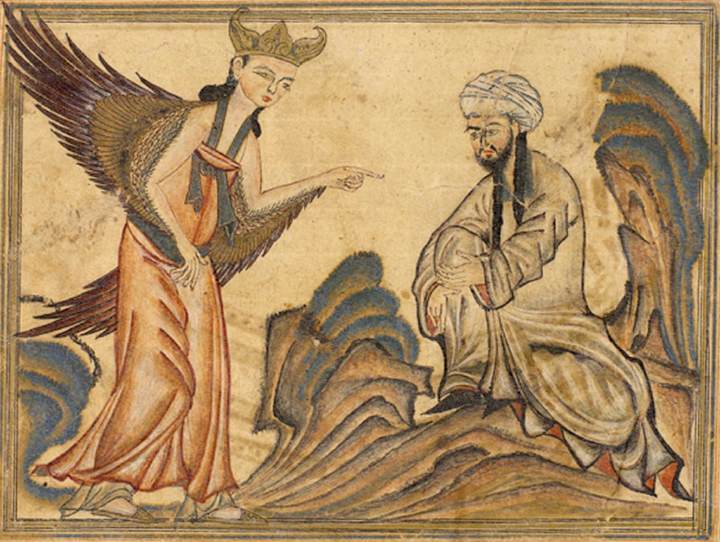
Muhammad was born in Mecca to a merchant tribe. Mecca and the lucrative trade was thought to be protected by many gods. It is this cultural polytheism in which Mohammed faced as a young merchant. When he was around 40 years of age, Mohammed began to see visions and hear voices. It was a supposed appearance of Gabriel where he was commanded to begin to write down what he had been seeing and hearing. This became the basis of the Quran, the most holy book of Islam. The message about Allah was strongly monotheistic, which angered Mohammed’s friends and colleagues in Mecca. Despite persecution, Muhammad's message attracted some followers in Mecca. They were forced to leave Mecca for Medina, a place where they would be free to practice their religion. It was there they built a community of faith and grew strong. The Muslims were able to eventually take over Mecca (after 20 years of conflict), destroying all the idols of the myriad gods and establishing their faith.
Summary of Beliefs
While the destruction of idols and a strong monotheistic faith seem like a good thing, Islam, through the Quran, also justifies violence, conquest, and submission of other faiths to Islam (‘of faiths other than Islam’). There is no ‘coexist’ with Islam. The name Muslim means submission; when a Muslim says that their religion is a religion of ‘peace’ it is really ‘peace’ brought by submission. Submission means that you believe that there is no god but Allah and that Muhammad is his prophet. If you do not believe this, then submission is brought about by the point of the sword. This has been Islam’s violent history, and it continues to this day. News from around the world tells us of kidnappings, rapes, burning buildings, and violent atrocities in the name of the false god Allah and his false prophet Muhammad. This type of violence continues despite the claims of some American Muslims that they are a religion of peace. The reality is that the entire history of Islam has been one of violence in the name of god.
That is because their god is not our God. While Allah has some attributes of our God, Allah is not the same. Specifically, there is no trinity (5:73), and as such, Jesus is only a prophet, not God the Son Himself (9:30) and He is not divine (5:17, 75). Jesus was not crucified (4:157) or resurrected from the dead. There is also no Holy Spirit; He is seen as one and the same with the Angel Gabriel (2:97, 16:102) and they delivered the inspiration for the Qu'ran to Muhammad. Muhammad is superior to all the other prophets, including Jesus. All the other ‘holy’ books, including the Torah and the teachings of Jesus (that were written down, but are now lost) are inferior to the Quran.
A major issue in faith is how one should live and why one should live in that way. Like all other religions, Islam has a list of rules to be followed in order to please god (Allah). Muslims believe there is a day of judgement (3:30, 35:33-37; 99:6-8) and that if your good deeds (following the 5 Pillars of Islam, the Quran, exemplifying Muhammad in your lifestyle) outweigh your bad deeds, you may go to paradise (if Allah is merciful to you) (3:135, 7:8-9, 21:47, 49:14; 66:8-9). There is a hell for all those who are not Muslims (3:77). The only way to avoid hell and to enjoy Paradise is to believe in Allah, do good deeds, repent of all your sins sincerely, and to practice Islam as part of the ‘True Faith’ (5:9; 24:26; 45:21-22; 64:7). The bad news is that there is no assurance of heaven. At the end of the day, it is still based upon Allah’s mercy.
The Biblical View
Biblical Christianity stands alone as a religion in the sense that it teaches salvation is by grace through faith (Ephesians 2:8-9) and not of works. A Muslim must point to his or her good works to elicit the mercy of Allah as their hope of paradise. The most important fact that differentiates Islam from Biblical Christianity is the former’s view of God. Specifically, Islam acknowledges Jesus as a good man, a prophet, but not wholly God and wholly man.
John 1:1-3, 10,14 In the beginning was the Word, and the Word was with God, and the Word was God. 2 The same was in the beginning with God. 3 All things were made by him; and without him was not any thing made that was made. 10 He was in the world, and the world was made by him, and the world knew him not. 14 And the Word was made flesh, and dwelt among us, (and we beheld his glory, the glory as of the only begotten of the Father,) full of grace and truth.
Colossians 1:15-17 Who is the image of the invisible God, the firstborn of every creature: 16 For by him were all things created, that are in heaven, and that are in earth, visible and invisible, whether they be thrones, or dominions, or principalities, or powers: all things were created by him, and for him: 17 And he is before all things, and by him all things consist.
Hebrews 13: 8 Jesus Christ the same yesterday, and to day, and forever.
Mark 2:5-10 When Jesus saw their faith, he said unto the sick of the palsy, Son, thy sins be forgiven thee. 6 But there were certain of the scribes sitting there, and reasoning in their hearts, 7 Why doth this man thus speak blasphemies? who can forgive sins but God only? 8 And immediately when Jesus perceived in his spirit that they so reasoned within themselves, he said unto them, Why reason ye these things in your hearts? 9 Whether is it easier to say to the sick of the palsy, Thy sins be forgiven thee; or to say, Arise, and take up thy bed, and walk? 10 But that ye may know that the Son of man hath power on earth to forgive sins, (he saith to the sick of the palsy,) 11 I say unto thee, Arise, and take up thy bed, and go thy way into thine house.
John 10:30 I and my Father are one.
John 20:28 And Thomas answered and said unto him, My Lord and my God.


When you have a deficient view of who Jesus is as Muslims do, it is very easy to have a false teaching about salvation. Muslims deny the deity of Christ and the sacrificial death of Christ and His resurrection; so there is no Gospel. Therefore, like every other religion, Muslims must work to earn their salvation. Biblical Christianity states that eternal life in heaven is based upon the finished work of Jesus alone. When Muslims rely on our own merit and good works, they, like us, would fall far short of God’s standard, which is perfection. The substitutionary work of Christ on the cross is the only hope of salvation. Through repentance and faith in Christ’s work, Christians have an assurance of heaven, based on the promise of God.
Matthew 5:20 For I say unto you, That except your righteousness shall exceed the righteousness of the scribes and Pharisees, ye shall in no case enter into the kingdom of heaven.
John 5:24 24 Verily, verily, I say unto you, He that heareth my word, and believeth on him that sent me, hath everlasting life, and shall not come into condemnation; but is passed from death unto life.
Acts 4:10-12 10 Be it known unto you all, and to all the people of Israel, that by the name of Jesus Christ of Nazareth, whom ye crucified, whom God raised from the dead, even by him doth this man stand here before you whole. 11 This is the stone which was set at nought of you builders, which is become the head of the corner. 12 Neither is there salvation in any other: for there is none other name under heaven given among men, whereby we must be saved.
Galatians 2:16-17 16 Knowing that a man is not justified by the works of the law, but by the faith of Jesus Christ, even we have believed in Jesus Christ, that we might be justified by the faith of Christ, and not by the works of the law: for by the works of the law shall no flesh be justified.17 But if, while we seek to be justified by Christ, we ourselves also are found sinners, is therefore Christ the minister of sin? God forbid

There is no hope in Islam, for it is only a man made system by which its practitioners may enter into Paradise if they repent, do enough good works, and Allah is merciful. This limits their voluntary evangelism, except for those who resonate with doing good works. This is why from its inception in the 7th century Islam has grown mostly at the point of a sword. The most hated enemy of Islam is Biblical Christianity, because the god of Islam is Satan, the great deceiver, and he is exposed when the Bible is preached. The darkness cannot overcome light, and though Islam will continue to burn churches and murder Christians in this world, they will not stop the work of Christ in this world. God will be victorious; The god of Islam and its followers will proclaim Jesus as LORD and God before they are all be cast into Hell on the day of judgment.